
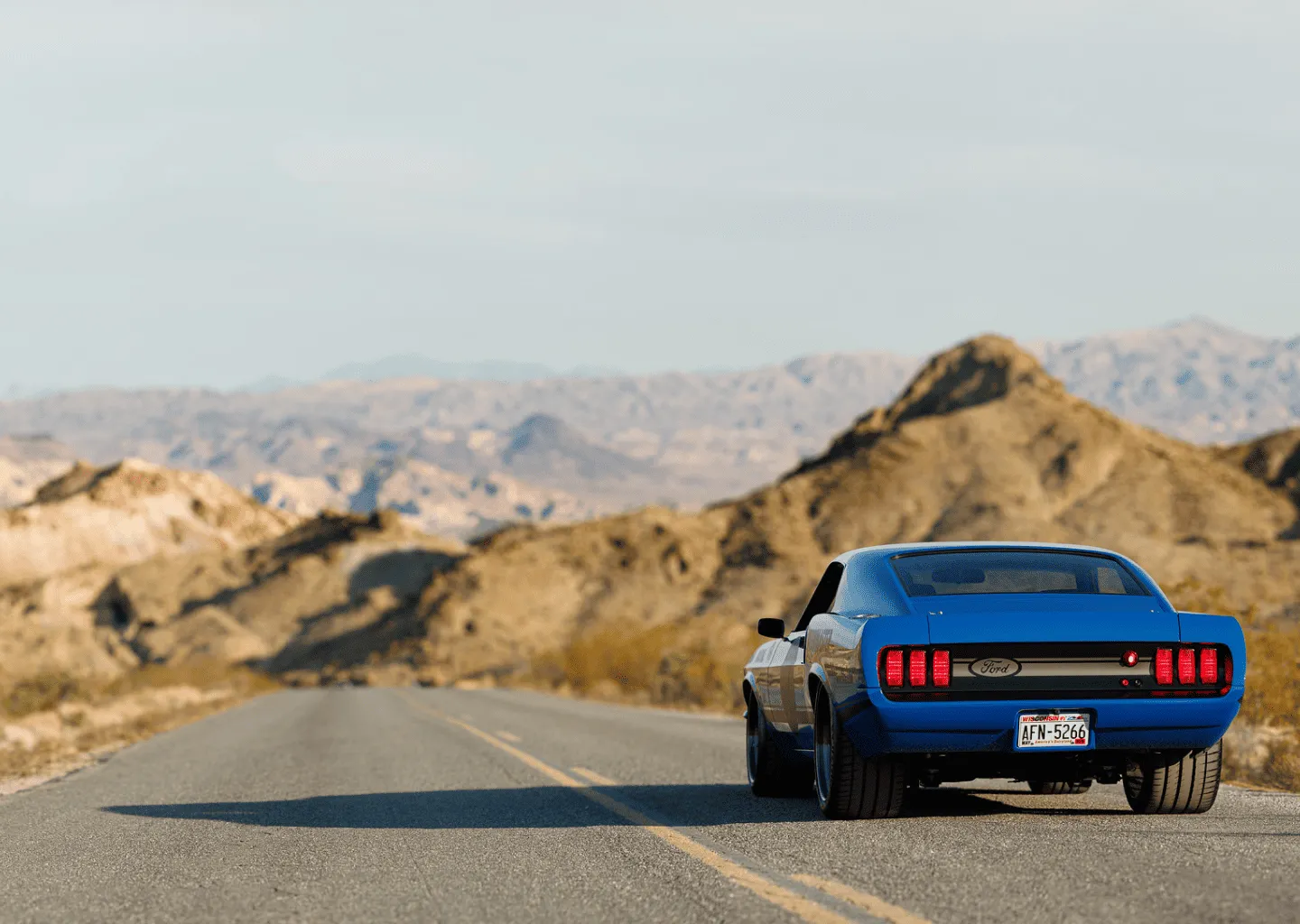


Other than the fact that they have four wheels and will get you from point A to point B, classic and modern cars don’t have much in common. New cars — even the coolest ones — are a commodity. It’s not hard to determine what they’re worth, in part because the manufacturer suggests its own price tag. Classic rides are a whole other ballgame. There’s a lot more to consider when figuring out whether one's a good deal. If you’re buying a ‘69 Corvette, for example, you’re also buying 60-plus years of stories.
Here are a few pointers to help you tell the difference between a good deal and a great one when it comes to classic cars.
Get a Feel for the Market
Valuing a vintage car used to mean relying on somewhat arbitrary figures from guides, often published by companies that had never even seen most of the vehicles they were attempting to price. Today, many market aggregators make it much easier to get a general idea of what an older vehicle should be worth. But over time, with hours and hours of scrolling through vehicle listings, eventually you'll also be able to get a sense of what the market demand is for a specific vehicle.
Vehicle value aggregators pull data from various marketplaces, including many collector-car auction sites. These easy-to-use interfaces allows viewers to refine listings down to a single model year, making it easy to sort out any major changes that might greatly impact value. For instance, a ‘73 Ford Mustang shares little more than its galloping pony badge with a ‘74 — and their values differ accordingly.
That said, you’ll still need to do plenty of fine-tuning. An aggregators ability to show value ranges and trends is, pardon the pun, invaluable, but it only paints part of the car’s picture.
Determine Any Special History or Features
No two vintage cars are truly alike. (Unless, of course, you find a pair of MGB GTs that were hermetically sealed for 50 years.) Certain features inevitably make a car worth more right off the bat. Some are obvious, like a more powerful engine or crowd-pleasing color, and relatively easy to track. Others, like rare optional equipment, may have niche appeal among enthusiasts but not necessarily for a broader audience.
A car’s history can make it more appealing, too. Certainly, one owned by a celebrity or with a competition history will command a premium. But even one with a long paper trail of receipts showing regular maintenance and repairs can have more appeal — and that extra value can be especially quantifiable. While the total amount of money spent on a car doesn't necessarily have a direct correlation to its value (a $20,000 car doesn't automatically become a $40,000 car just because someone spent that much fixing it), good records can boost the price.
Look Closely at Its Condition
A car’s physical condition is generally the most important factor determining its value. A vehicle with excellent paintwork, a body free of dents or rust, and a nice interior will certainly be worth more than one that needs lots of work.
Similarly, a car’s mechanical condition has a huge impact on its value. If a car needs something like a transmission rebuilt, its value can drop by at least the cost of that repair, if not more.
Value and condition go hand in hand, but how you plan to use the vehicle plays a role, too. If you're just looking for something to take to cruise-ins on warm Friday nights, perhaps it doesn’t need to be perfect. If you want to win trophies at shows, however, the cost of correcting paint and body issues can skyrocket.
Ultimately, Get an Appraisal
A detailed classic car appraisal isn’t usually all that expensive, but it can be worth the cost if you’re struggling to determine whether an old car is a good deal. Appraisals can also be a good negotiating or sales tactic, and they can be helpful later if you decide to sell the vehicle. Today, it’s also possible to get a general online appraisal based on photographs, your description of the vehicle, and sometimes a live walkaround.
LEARN MORE:
Considering Buying A Classic Car Or Truck? Here Are Some Tips To Guide You
Learn Why Pre-Purchase Inspections (PPI) Are Always a Good Idea